
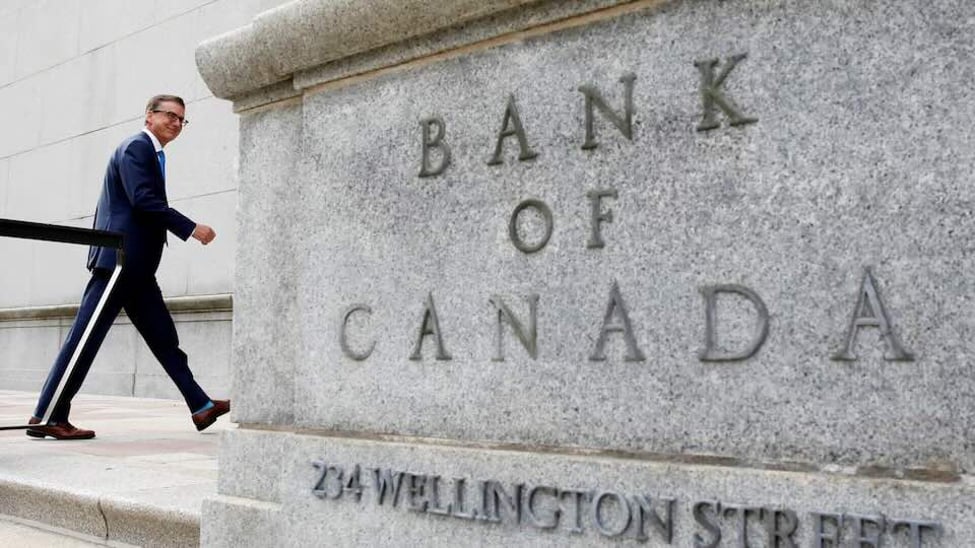
As Canada enters 2026, the housing market looks very different from what it did just a year ago. Economists broadly agree that the Bank of Canada (BoC) is likely entering a rate-holding pattern, marking a period of relative stability after years of rapid change.
“We don’t see the Bank of Canada moving at all,” CIBC economist Benjamin Tal told Yahoo Finance Canada, adding that mortgage rates are likely at or near their lowest point.
This outlook contrasts sharply with early 2025, when further rate cuts were expected, mortgage rates were assumed to keep falling, and trade-related economic risks — particularly from the U.S. — were still hypothetical.
Today, those risks are real. With the review of the Canada–U.S.–Mexico Agreement (CUSMA) approaching and global trade tensions resurfacing, uncertainty remains the biggest wildcard.
“If we are all wrong and there’s going to be a major trade dispute… that would be recessionary for the Canadian economy, and then all bets are off,” Tal cautioned.
Against that backdrop, here’s what buyers, sellers, and homeowners renewing their mortgages should know as rates, prices, and sales volumes are expected to remain mostly flat in 2026.
First-Time Buyers: Time Is Finally on Your Side
The psychology of the housing market has shifted dramatically.
While asking rents remain elevated in many cities, national average rents hit a 30-month low in December, easing pressure on would-be buyers. Combined with higher inventory and muted price expectations, urgency has largely disappeared.
“People are not rushing — and that’s a good thing,” Tal said. “That’s a normal market, as opposed to a market that was panicking until very recently.”
This shift is especially noticeable in the condo market, where excess inventory — particularly in the Greater Toronto Area — has created a true buyer’s market. Prices may still soften in some areas through 2026, and Royal LePage CEO Phil Soper advises buyers to account for that risk when making offers.
“It’s not hard math,” Soper said. “It’s a little bit of spreadsheet work.”
For first-time buyers, patience, due diligence, and firm financing conditions are now advantages — not obstacles.
Move-Up Buyers: Why Falling Prices Can Actually Help
For homeowners looking to upgrade, falling prices can feel discouraging — but the math often tells a different story.
If prices have corrected across the board, the dollar gap between your current home and your next home shrinks.
“Mathematically, you’re winning,” Soper explained.
In addition, the market has flipped from the pandemic-era “buy first” mentality to a “sell first” strategy. With more inventory available, move-up buyers can confidently list their home, secure a firm sale, and then shop without pressure.
That said, Tal warns that many homeowners who purchased in 2021 may no longer have the equity buffer they expected.
“The window of refinancing is closed,” he said, noting that in many cases, home values are now lower than they were at peak levels.
Sellers: Price Realistically or Risk Sitting Still
For sellers, expectations often lag reality.
TD mortgage specialist Steve Ng notes that many sellers remain anchored to outdated price benchmarks.
“You’re always thinking, ‘I could have got this, I should have got this, and maybe I still can get this,’” Ng said. “But the market is shifting.”
Multiple offers are now rare, and conditional offers with 10–14 day financing periods are once again standard — a clear sign that leverage has shifted back to buyers.
Sellers who chase yesterday’s prices risk watching their listing sit for six to nine months, while carrying costs like utilities, property taxes, and maintenance quietly erode profits.
Soper’s advice is simple and blunt:
“Price to market, or you’re just going to make yourself miserable. The market is what the market is.”
Mortgage Renewals: Act Early — and Strategically
Even with the BoC expected to hold rates, 2026 is shaping up to be the real stress test for borrowers.
Many homeowners who bought in 2021 are renewing into a market where their home may be worth less than what they paid, removing refinancing as a safety net.
“Close to five per cent of all mortgages in Canada are going to face more than a 40 per cent increase in payments,” Tal warned. “That’s not insignificant.”
In this environment, auto-renewing your mortgage is risky.
Ng strongly advises borrowers to shop and lock in rates up to 120 days before renewal. This is critical because fixed mortgage rates follow bond yields, not the Bank of Canada’s overnight rate.
Tal adds that five-year fixed rates could begin rising in the second half of 2026 as bond markets start pricing in possible BoC hikes in 2027.
“Don’t wait for that renewal letter,” Ng warned. “By then, you’re only 30 to 60 days out — when you could have secured a rate much earlier.”
For homeowners facing severe payment increases, lenders may offer solutions such as:
Extending amortization periods
Consolidating higher-interest debts into the mortgage
Reviewing the household’s total debt structure to improve cash flow
The key is starting early and exploring every option.
Final Takeaway
2026 is shaping up to be a year of stability — not momentum. Bidding wars are largely gone, buyers have time, sellers must be realistic, and mortgage renewals demand proactive planning.
While interest rates may be on hold, complacency is not an option. In this market, informed decisions — made early — will matter more than timing the next rate move.

